



 Pacientes
 Médicos
Education
Internal Training Center AHA
Basic Life Support Course (BLS): The Hospital holds an International Training Center with the American Heart Association (AHA) credentials. The AHA has evaluated our facilities and our instructors are qualified to train and replicate various certified courses.
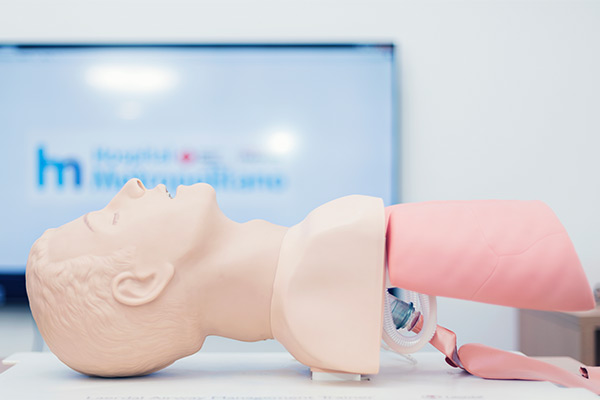
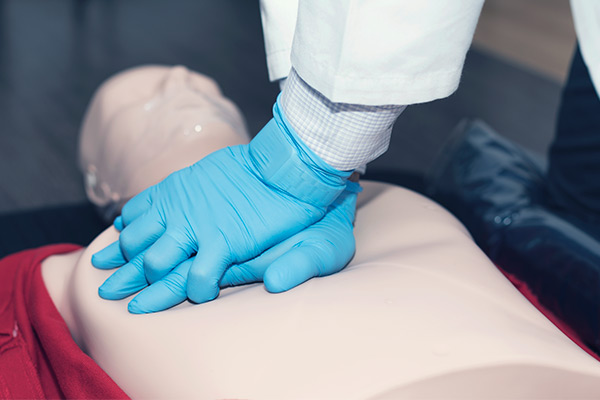
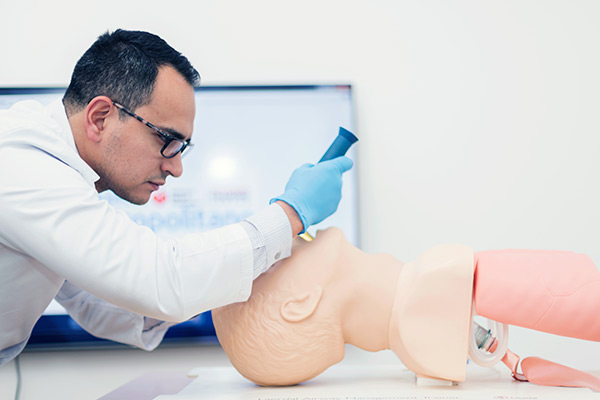
Our AHA International Training Center has trained all the internal staff of Metropolitano Hospital that has contact with patients, thus ensuring a timely and effective response to cardiorespiratory emergencies.
We offer these certified courses:
BLS is key for saving lives after a cardiac arrest. This course with international credentials has been structured in order to replicate updates of highlights of the American Heart Association Guidelines for CPR (Cardiopulmonary Resuscitation).
This course teaches Basic Life Support skills for a single rescuer or a team, applicable both, inside and outside the Hospital.
Topics to be discussed:
- The importance of high quality CPR and its impact on survival.
- The application of the survival chain procedure.
- Signs that show that a person needs CPR.
- Skills acquisition in order to perform high quality CPR in adults, kids and infants.
- Demonstration of skills using the Automatic External Defibrillator (AED)
- Effective ventilations with a barrier device.
- Resuscitation with one or more rescuers and acquisition of skills for teamwork.
- Techniques to eliminate obstructions caused by foreign bodies in the airway (obstruction) in adults, children and infants.
Duration and modality:
- The course lasts approximately 6 hours. Students participate in simulated clinical scenarios and in learning stations. The students work with a BLS instructor, certified by AHA in order to complete the practice of BLS skills and then they take a written exam.
Certification:
- Upon successful completion of the course and after passing the assessments, the student is awarded with the American Heart Association BLS course completion card, valid worldwide for 2 years.
Schedule:
- Schedules are according to the needs of the student or group, being able to be on weekdays or weekends.
- Advanced Life Support (ACLS)
- Advanced Life Support (ACLS) COURSE:
Advanced cardiovascular life support (SVCA) is developed on the basis of basic life support (BLS) emphasizing the importance of high quality continuous CPR. The practical training and simulated cases of this advanced course are designed to help improve your skills in the recognition and treatment of cardiac arrest, immediate attention after cardiac arrest, acute arrhythmia, stroke and acute coronary syndromes.
Open to:
Designed for health providers who participate directly in the management of cardiorespiratory arrest and other cardiovascular emergencies. This includes the staff of the intensive care units, emergency response and emergency medicine, such as doctors, nurses and paramedical personnel, as well as other people who need the ACLS course completion card for their work or for other reasons.
Contents and topics:
- Applying the sequence of BLS, primary and secondary evaluations to carry out a systematic evaluation of adult patients.
- Developing a high-quality, fast BLS that includes the prioritization of early chest compressions and the integration of the early use of an Automated External Defibrillator (AED).
- Recognize and carry out an early management of respiratory arrest.
- Analyze the early recognition and management of ACS and stroke, including appropriate preparations.
- Recognizing and performing early management of bradyarrhythmias and tachyarrhythmias that could lead to cardiac arrest or complicate the result of resuscitation.
- Ensure effective communication as a member and leader of a high performance team.
- Evaluate the resuscitation efforts during cardiac arrest by means of the continuous assessment of the quality of cardiopulmonary resuscitation (CPR), the monitoring of the physiological response of the patient and the transmission of information in real time to the team.
- Discussing how calling upon a rapid response team or a medical emergency team can improve the patient's evolution.
- Defining care systems.
Modality and examinations:
- When leaded by an instructor, students participate in simulated clinical scenarios and learning stations. Students work with an AHA ACLS instructor in order to fulfill ACLS skills and to pass the examination. Students take a written test in the class.
- Once students sign up, they receive an e-book of ACLS provider in order to check contents ahead.
- Advanced Life Support (ACLS) COURSE:
Duration:
- Two days (Saturday and Sunday) from 08:30 to 16:00.
- Once students sign up, they receive an e-book of ACLS provider in order to check contents ahead.
- Includes lunch and snacks
You can also ask about our re-certification courses for previously trained professionals.
AHA International Training Center Medical Training Metropolitano Hospital
For more information, prices and for signing up, contact:
Luis Bermeo, M.D. - +593 2 399-8000 ext. 2318 / lbermeo@hmetro.med.ec
Leonor Jimenez - +593 2 399-8000 ext. 2120 / educacion@hmetro.med.ec

ibermeo@hmetro.med.ec
educacion@hmetro.med.ec

3998000 ext 2318
3998000 ext 2120